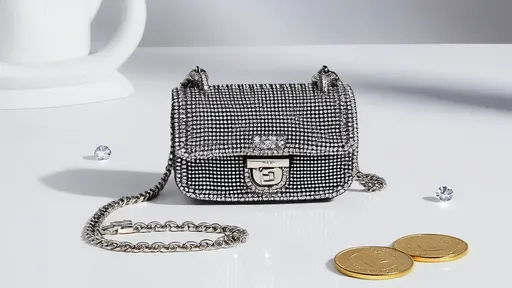
In the world of luxury fashion, a curious phenomenon has taken hold: the smaller the handbag, the heftier the price tag. This trend, often referred to as the "miniaturization paradox," sees consumers willingly spending significant sums on diminutive accessories that offer minimal practical utility. At first glance, this seems counterintuitive. Why would a rational buyer invest in an object that holds little more than a lipstick and a credit card when a larger, more functional alternative exists at a lower cost? The answer lies not in the realm of logic, but in the complex interplay of desire, identity, and perceived value that defines modern luxury consumption.
The allure of the mini bag is deeply rooted in its symbolism. In an era where smartphones have replaced wallets and car keys, the traditional purpose of a handbag—to carry one's essentials—has been fundamentally altered. The tiny bag, therefore, is not purchased for its utility, but for what it represents. It is a statement piece, a bold declaration of style over substance. It signals that the owner is so effortlessly chic, so in command of their aesthetic, that they require only the barest essentials. This is a powerful form of social currency in the image-driven economy of social media, where a unique and recognizable accessory can become a personal trademark.
Luxury brands have masterfully capitalized on this shift in consumer psychology. They understand that scarcity and exclusivity are the cornerstones of desirability. A miniature version of an iconic bag, like the Hermès Mini Kelly or the Chanel Classic Flap in its smallest size, is often produced in extremely limited quantities. This artificial scarcity creates a frenzy among collectors and fashion enthusiasts, driving demand and, consequently, price far beyond the cost of materials and craftsmanship. The purchase becomes less about acquiring an object and more about gaining entry into an exclusive club, securing a piece of fashion history that is recognizably rare and difficult to obtain.
Furthermore, the craftsmanship required to miniaturize a complex design without compromising its integrity is immense. Every stitch, clasp, and detail must be perfectly scaled down, often requiring more meticulous handwork than a larger version. Brands justify the exorbitant cost by highlighting this intensive labor and the superior quality of materials used in such small quantities. The high price becomes a proxy for exceptional artistry, making the object not just a bag, but a wearable piece of art. The consumer isn't just buying a product; they are investing in a narrative of heritage, skill, and uncompromising quality.
The rise of the "it" bag in miniature form also speaks to a broader cultural moment. In a world saturated with stuff, minimalism and conscious consumption are increasingly valued. A tiny, exquisite bag aligns with this ethos. It represents a curated life, a choice to own fewer but better things. It is the antithesis of the oversized, overstuffed tote bag that screams of hectic schedules and countless obligations. The mini bag is light, unburdened, and purely for pleasure. It is an accessory for leisure and display, not for labor and storage, which adds to its aspirational quality.
Social media, particularly platforms like Instagram and TikTok, acts as a powerful accelerant for this trend. The mini bag is visually striking and perfectly sized for the frame of a photo or video. Its compact nature makes it a focal point, an easy way to elevate any outfit and create a cohesive, high-fashion look. Influencers and celebrities showcasing these micro-treasures generate immense hype, creating a trickle-down effect where consumers crave the same symbol of status and style. The bag's photogenic quality and its association with a glamorous lifestyle are potent marketing tools that directly translate into sales, regardless of the item's practical shortcomings.
Ultimately, the consumer who buys a $5,000 bag that can barely fit a phone is making a calculated investment in their personal brand. The value derived is emotional and social. It is the thrill of the hunt, the joy of ownership, the confidence gained from wearing a coveted object, and the subtle signals of wealth and taste it communicates to peers. The price is not for the physical leather and metal; it is for the intangible feelings of exclusivity, identity, and belonging that the brand promises. In the economy of desire, the miniaturization paradox isn't a paradox at all. It is a perfectly rational transaction where the currency is dreams and the dividend is status.
The trajectory of this trend suggests it is more than a passing fad. It reflects a permanent evolution in how we define value and utility in luxury goods. As long as consumers seek ways to express individuality and affluence in a crowded marketplace, the smallest, most exclusive, and most expensive items will continue to hold an irresistible appeal. The mini bag, in its absurdly impractical and beautiful glory, is the perfect emblem for this new era of luxury—where what you carry is far less important than the story it tells about who you are.

By /Aug 21, 2025
By /Aug 21, 2025

By /Aug 21, 2025
By /Aug 21, 2025

By /Aug 21, 2025
By /Aug 21, 2025

By /Aug 21, 2025

By /Aug 21, 2025

By /Aug 21, 2025

By /Aug 21, 2025

By /Aug 21, 2025

By /Aug 21, 2025

By /Aug 21, 2025

By /Aug 21, 2025

By /Aug 21, 2025

By /Aug 21, 2025
By /Aug 21, 2025
By /Aug 21, 2025

By /Aug 21, 2025

By /Aug 21, 2025