In the vast tapestry of fashion history, few items have undergone as remarkable a transformation as the humble Mary Jane shoe. What began as a practical, child-friendly design has, over the course of a century, evolved into a versatile and enduring symbol of style, nostalgia, and rebellion. Its journey from the playground to the runway is a fascinating story of cultural shifts, technological advancements, and the cyclical nature of trends.
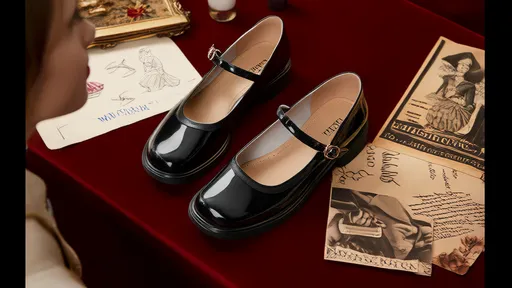
The origins of the Mary Jane are deeply rooted in utility and simplicity. The name itself is believed to have been popularized by the 1902 comic strip "Buster Brown," where the character Mary Jane was depicted wearing these now-iconic shoes. The classic design was straightforward: a single, rounded toe, a low heel, and, most importantly, a single strap across the instep fastened with a buckle or button. This strap was the key innovation, providing a secure fit that was ideal for active children. Unlike laced shoes, which could come undone, the buckled strap ensured that the shoe stayed on a child's foot, making it a favorite among parents and nannies in the early 20th century. It was, first and foremost, a shoe built for function.
For decades, the Mary Jane remained firmly in the domain of children's wear. It was a staple of school uniforms and Sunday best outfits for young girls, synonymous with innocence and a certain bygone era of propriety. They were often paired with knee-high socks and pinafore dresses, creating an image of youthful charm. However, the mid-20th century began to see the first subtle cracks in this identity. As hemlines rose and youth culture gained prominence, the shoe started to be viewed through a new, more fashionable lens. It was no longer just for little girls; teenagers and young women began to adopt the style, pairing it with their burgeoning mod and preppy looks. The shoe was beginning its slow escape from the nursery.
The true turning point, the moment the Mary Jane was catapulted into the realm of high fashion, arrived with a series of cultural earthquakes. The punk movement of the 1970s, with its ethos of deconstruction and rebellion, embraced the Mary Jane but subverted its innocent connotations. Bands and their followers took the classic shoe and made it their own, often in stark black leather or patent leather, sometimes with exaggerated platform soles or customised with spikes and chains. This was no longer a child's shoe; it was a statement of defiance. Simultaneously, across the Atlantic, the preppy aesthetic of the 1980s was also reclaiming the style, pairing it with pleated skirts and blazers, reinforcing its versatility. It could be both edgy and elegant, a duality that would become its greatest strength.
Designers took note. The once-humble children's shoe became a recurring muse on the world's most prestigious runways. Visionaries like Vivienne Westwood used it to amplify her punk-inspired collections, while others like Marc Jacobs and Miuccia Prada reimagined it in luxurious materials, from rich suedes to glittering metallics, and with modernized silhouettes, including higher heels and pointed toes. This designer endorsement was crucial. It legitimized the Mary Jane as a serious fashion item for adults, transforming it from a symbol of childhood into an accessory coveted by style-conscious women everywhere. The buckle was no longer just a fastener; it was a design detail, a hallmark of a classic.
Today, the Mary Jane enjoys a status few footwear styles can claim: it is a true fashion perennial. Its appeal lies in its powerful evocation of nostalgia, a quality that modern fashion relentlessly mines. Wearing a pair of Mary Janes taps into a collective memory of simpler times, yet its design feels utterly contemporary. It seamlessly bridges the gap between vintage inspiration and modern trend. We see it everywhere: styled with sheer tights and miniskirts for a 90s revival look, paired with tailored wide-leg trousers for an off-kilter office outfit, or worn with slouchy socks and casual dresses for the popular "balletcore" aesthetic. Its ability to adapt to nearly any trend while retaining its core identity is nothing short of remarkable.
Furthermore, the modern iteration of the Mary Jane is a testament to the evolution of comfort and wearability in fashion. While high-fashion versions with stiletto heels exist, the market is also flooded with flat or low-heeled versions that prioritize comfort without sacrificing style. Brands specializing in "heritage" or "comfort-first" footwear have put their own spin on the design, using advanced footbeds and supportive lasts. This has broadened its demographic appeal immensely, making it a shoe for women of all ages, from teenagers to those who might have worn them in their own youth. It has come full circle, once again being praised for its wearability, just as it was a hundred years ago.
The victory of the Mary Jane is a multifaceted one. It is a victory of design, proving that a simple, functional form can possess an inherent and timeless beauty. It is a victory of cultural adaptation, demonstrating an incredible ability to absorb and reflect the spirit of the times, from innocence to rebellion and back again. Most importantly, it is a victory of emotional connection. A shoe that once symbolized the carefree days of childhood now, for the adult wearer, represents a complex blend of nostalgia, personal style, and enduring comfort. It has successfully traversed the difficult path from a utilitarian object to a beloved icon, securing its place not just in our closets, but in the very story of fashion itself.
By /Aug 21, 2025
By /Aug 21, 2025

By /Aug 21, 2025
By /Aug 21, 2025

By /Aug 21, 2025
By /Aug 21, 2025

By /Aug 21, 2025

By /Aug 21, 2025

By /Aug 21, 2025

By /Aug 21, 2025

By /Aug 21, 2025

By /Aug 21, 2025

By /Aug 21, 2025

By /Aug 21, 2025
By /Aug 21, 2025

By /Aug 21, 2025
By /Aug 21, 2025
By /Aug 21, 2025
By /Aug 21, 2025

By /Aug 21, 2025