When Emma Watson was appointed as a UN Women Goodwill Ambassador in July 2014, the announcement was met with both excitement and curiosity. Known globally for her role as Hermione Granger in the Harry Potter film series, Watson had already established herself as an articulate and thoughtful advocate for gender equality. Her appointment, however, marked a significant escalation in her activism, moving from red carpet interviews to the high-stakes podium of international policy and grassroots mobilization.
The core of her mandate focused on the empowerment of young women and girls, with a specific emphasis on education. Shortly after her appointment, she launched the HeForShe campaign, a solidarity movement encouraging men and boys to become agents of change for gender equality. While HeForShe garnered worldwide attention, Watson’s work quietly extended far beyond this initiative, deeply engaging with one of the most pressing yet overlooked issues: the education of girls in Africa.
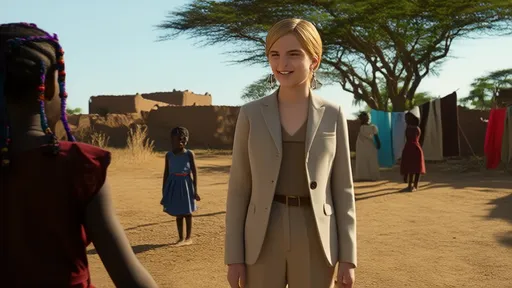
Her journey into this arena was not a mere celebrity endorsement. Watson immersed herself in the complex realities facing African girls. She traveled to countries like Malawi and Zambia, not for photo opportunities, but for listening and learning. She met with students, parents, teachers, and community leaders, hearing firsthand about the barriers—cultural, economic, and infrastructural—that prevent girls from attending and completing school. These barriers often include early and forced marriage, societal preference for educating boys, long and unsafe distances to school, and a simple lack of facilities like separate toilets for girls.
This on-the-ground understanding shaped her advocacy into something far more potent than awareness-raising. She used her platform not just to highlight the problem, but to amplify the solutions being crafted by local communities and organizations. In speeches at the UN and at major universities, she consistently wove in the narratives of the girls she met, giving a human face to the staggering statistics. She spoke of a young Malawian girl’s determination to become a doctor despite being pulled out of school for marriage, and of the transformative power of a single scholarship that allowed another to continue her studies.
Watson’s approach has been notably collaborative. She partnered with established organizations like CAMFED (Campaign for Female Education), which supports girls in rural Africa through its network of alumni leaders. She understood that sustainable change is not imposed from the outside but is nurtured from within. By aligning herself with such groups, she helped channel global attention and resources directly to community-led efforts that have proven effective. Her social media channels became megaphones for their work, directing her millions of followers to support specific fundraising campaigns and to learn about the nuanced challenges on the ground.
The impact of this focused advocacy is multifaceted. On a practical level, her involvement has directly contributed to increased funding for girls' education programs in several African nations. More abstractly, but perhaps more importantly, she has helped shift the global conversation. She reframed girls' education not as a charitable cause but as a fundamental human right and a critical driver of economic and social development. When a world-famous actress speaks with passion and knowledge about the return on investment for educating a girl, policymakers and corporate leaders listen.
Critics might argue that celebrity advocacy often oversimplifies complex issues. However, Watson’s long-term commitment and depth of engagement have largely shielded her from such criticism. She did not parachute in for a day. She has returned to the region multiple times, continually educating herself and evolving her strategy. She has also leveraged her professional skills, participating in documentary projects that tell these stories with dignity and depth, ensuring the narrative remains in the control of those living it.
Today, the landscape of girls' education in Africa remains challenging, but the path forward is brighter. The relentless work of local activists, combined with the amplified voice of advocates like Emma Watson, has placed the issue firmly on the international agenda. It is now recognized as a cornerstone for achieving the UN’s Sustainable Development Goals. Watson’s tenure as a Goodwill Ambassador demonstrated that celebrity, when wielded with humility, preparation, and genuine partnership, can be a powerful catalyst for tangible progress. Her legacy is not just in the speeches she gave, but in the classrooms that remained open, the scholarships that were granted, and the countless girls who saw in her a reflection of their own potential and a champion for their right to learn.

By /Aug 22, 2025

By /Aug 22, 2025

By /Aug 22, 2025
By /Aug 22, 2025

By /Aug 22, 2025

By /Aug 22, 2025
By /Aug 22, 2025

By /Aug 22, 2025

By /Aug 22, 2025

By /Aug 22, 2025

By /Aug 22, 2025
By /Aug 22, 2025

By /Aug 22, 2025

By /Aug 22, 2025

By /Aug 22, 2025

By /Aug 22, 2025
By /Aug 22, 2025

By /Aug 22, 2025
By /Aug 22, 2025
By /Aug 22, 2025